Customer data becomes valuable when it changes who receives a message, what that message says, and when it arrives.
Direct mail list segmentation divides a broad audience into smaller groups based on shared characteristics or behaviors. Instead of sending the same mailpiece to everyone, you can tailor the creative, offer, and call to action to each segment.
Creative still matters, but even a strong design will struggle if it reaches people who are unlikely to care about the message. Here are seven ways to use customer data to build more targeted direct mail lists.
1. Geographic segmentation
Geographic data is one of the simplest ways to divide a direct mail list. You can segment recipients by:
- ZIP code
- City or county
- State or region
- Service area
- Distance from a store or location
This is especially useful for businesses with physical locations, regional services, local inventory, or location-specific promotions.
A home services company could promote seasonal services based on regional weather patterns. A retailer could direct customers to their closest store. A real estate company could personalize mailers with neighborhood-specific information.
Geographic segmentation also helps prevent wasted sends. Instead of mailing an offer to everyone in your database, you can limit the campaign to recipients who live within the area where the product or service is available.
2. Demographic and firmographic segmentation
Demographic data helps consumer brands tailor mail based on characteristics such as age range, household composition, income range, or homeownership status.
The goal is not to make assumptions about individual recipients. It is to identify meaningful differences that affect which products, services, or offers are likely to be relevant.
For example, households with young children may have different needs than empty nesters. Renters may respond to a different home services offer than homeowners.
For B2B direct mail, firmographic data serves a similar purpose. Business lists can be segmented by:
- Industry
- Company size
- Annual revenue
- Number of locations
- Growth stage
- Geographic market
A small local business should not necessarily receive the same message as a national enterprise. Firmographic segmentation lets you adjust the offer, examples, format, and call to action to fit the recipient’s organization.
3. Interests and preferences
Customer preferences can tell you more than basic demographic data.
If customers have shared their interests, browsed specific categories, selected communication preferences, or engaged with particular content, use that information to make the mailpiece more relevant.
A retailer could highlight products from a frequently viewed category. A travel company could tailor imagery based on preferred destinations. A nonprofit could send different messages based on the causes each donor has previously supported.
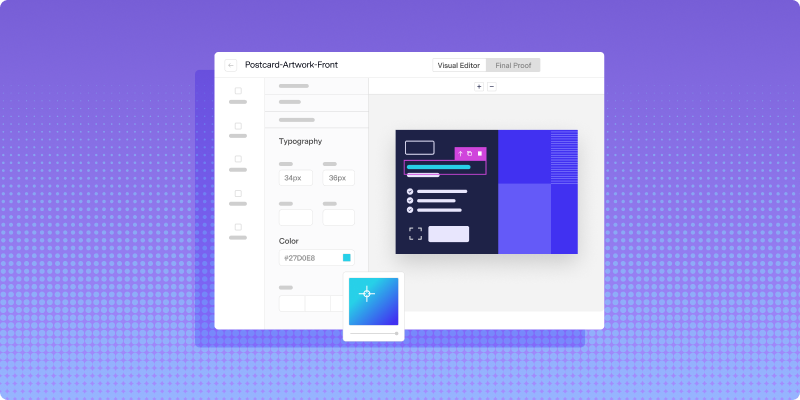
Interest-based segmentation can influence more than the written copy. With Lob’s Create + Personalize tools, teams can use customer data, merge variables, and conditional logic to change images, offers, headlines, and other mailpiece elements.
Personalization should feel useful rather than intrusive. Use data that has a clear connection to the recipient’s relationship with your brand and the purpose of the campaign.
4. Customer milestones and life events
Milestones give brands a natural reason to reach out.
You might segment customers based on:
- Birthdays
- Membership anniversaries
- First-purchase anniversaries
- Subscription renewals
- Loyalty milestones
- Upcoming appointment dates
- Recent moves
These campaigns work because the timing and message are connected to something specific. A birthday offer feels more relevant than an unexpected generic discount. An anniversary mailer can thank a customer while introducing the next product, service, or loyalty benefit.
Life events can also indicate changing customer needs. New movers may be searching for nearby services, while new homeowners may be making purchases across several categories.
Only use life-event data that was collected or sourced appropriately, and avoid relying on sensitive information that is not necessary for the campaign.
5. Shopping and browsing behavior
Digital behavior can trigger physical mail.
Consider building segments around actions such as:
- Abandoning a cart
- Browsing a product repeatedly
- Adding an item to a wishlist
- Starting an application without finishing it
- Visiting a pricing or service page
- Allowing a free trial to expire
A recipient who has already shown interest does not need a broad introduction to your company. The direct mail campaign can focus on the item, service, or decision they were considering.
For example, an abandoned-cart mailer could feature the product left behind and provide an incentive to complete the purchase. Someone who repeatedly views a product category could receive recommendations from that category.
Timing is important. The customer’s behavioral data needs to connect to the direct mail workflow quickly enough for the message to remain relevant.
Lob integrations connect direct mail with CRM, customer data, and marketing automation tools so teams can use existing audience data to trigger targeted sends.
6. Purchase history and customer value
Purchase history can help you determine what a customer is likely to need next.
Useful segments might include:
- First-time customers
- Repeat customers
- High-value customers
- Subscribers
- Customers who buy from a specific category
- Customers approaching a likely replenishment date
- Customers who have not purchased recently
A first-time customer might receive a welcome mailer explaining how to get more value from the purchase. A repeat buyer could receive early access to a new product. A customer who regularly buys a consumable product might receive a replenishment reminder.
Purchase history also supports cross-sell and upsell campaigns. Instead of promoting the same product to everyone, recommend an item that complements what the recipient already owns.
Lapsed-customer campaigns should also reflect the previous relationship. A former customer does not need the same introduction as a brand-new prospect. The message should acknowledge their history and provide a relevant reason to return.
7. Previous channel interactions
Direct mail should complement your other marketing channels rather than repeat them.
Use CRM and marketing automation data to understand the recipient’s most recent interaction. That could include:
- Opening or ignoring an email
- Downloading a guide
- Attending an event
- Speaking with a sales representative
- Completing a purchase
- Contacting customer support
- Responding to a previous mailpiece
The next message should move the conversation forward.
A lead who downloaded a guide could receive a mailpiece with related information and a consultation offer. A customer who just completed a purchase should receive a welcome or onboarding message instead of another acquisition promotion.
You can also use direct mail to reach customers who have stopped responding through digital channels. Rather than sending another version of the same email, use the physical mailpiece to introduce a different message, offer, or format.
Lob’s direct mail APIs and integrations let teams trigger mail from CRM and customer data systems so it can become part of the same automated journeys as email and other digital channels.
How to improve your direct mail segmentation strategy
These seven tactics are a starting point. The strongest audience strategies often combine more than one type of segmentation.
Instead of targeting every customer in a particular city, you might target lapsed customers in that city who previously purchased from a specific category. That creates a smaller but more relevant audience.
As you build your segments:
- Start with the campaign goal.
- Choose the customer data that directly supports that goal.
- Avoid making segments so narrow that they cannot be tested effectively.
- Test creative, offers, and timing across meaningful audience groups.
- Measure response and conversion rates by segment.
- Remove duplicate, incomplete, and outdated records.
Address quality is especially important. A well-targeted campaign still wastes money if the recipient has moved or the address cannot receive mail. Address verification and validation help standardize address records and confirm deliverability before a campaign enters production.
Build more targeted direct mail campaigns with Lob
Lob helps teams turn customer data into personalized, automated direct mail campaigns.
Upload a list or connect Lob with your existing CRM, CDP, or marketing automation platform. From there, you can segment audiences using lifecycle stages and custom fields, personalize mailpiece elements, verify addresses, and trigger sends based on customer activity.
Book a demo to see how Lob can help you reach the right audience with more relevant direct mail.
Frequently asked questions about direct mail lists
FAQs

Do direct mail lists still exist?
Yes. A direct mail list is the audience data used to determine who receives a campaign. Modern lists can include much more than names and mailing addresses. They may also contain lifecycle, purchase, geographic, preference, and behavioral data that helps teams personalize each send.
What are the main types of direct mail lists?
The two main categories are house lists and acquisition lists.
A house list comes from your organization’s existing customer and prospect data, including customers, leads, subscribers, event attendees, and previous buyers.
An acquisition list comes from an external data provider and is used to reach new prospects. These lists can often be built around geographic, demographic, interest, or firmographic criteria.
How do you build a direct mail list?
Start with the customer and prospect information already stored in your CRM, ecommerce platform, subscription system, or marketing tools.
Define the goal of the campaign, identify the people most likely to take the desired action, and select the data needed to create that segment. Before sending, remove duplicates, fill in required fields, and verify mailing addresses.
Teams that need to reach people outside their existing database can work with a reputable data provider to create an acquisition audience that matches their targeting criteria.
What are examples of direct mail?
Common direct mail formats include postcards, letters, self-mailers, catalogs, booklets, and dimensional packages.
The right format depends on the complexity of the message, the campaign goal, the audience, and the available budget. Postcards work well for concise promotions and reminders, while letters provide more space for detailed or personal communication.
Answered by:

Sam Melero