.avif)

A successful direct mail campaign takes more than an attractive postcard. You need the right audience, relevant copy, a compelling offer, clear design, delivery visibility, and a way to measure what happens after each piece enters the mailstream.
Direct mail can also work alongside email, paid media, SMS, and other digital channels. For example, a mailpiece can introduce an offer before an email follow-up or bring someone back to a digital journey after they stop engaging online. Connecting direct mail with your other channels creates a more coordinated experience while giving each touchpoint a clear purpose.
Here are six components that can help you build a direct mail campaign that reaches the right people and produces useful insights for your next send.
1. Build a targeted mailing list
Sending the same mailpiece to every available address wastes budget and makes your message less relevant. Use customer data to identify the people most likely to benefit from your offer, then divide them into meaningful audience segments.
You might segment recipients using:
- Purchase history
- Website or product engagement
- Customer lifecycle stage
- Geographic location
- Demographic information
- Loyalty or subscription status
- Time since the last purchase
A targeted list helps your campaign in three ways:
- Maximizes campaign impact. Segmentation lets you match your copy, offer, and creative to the people most likely to respond.
- Enables testing and optimization. You can test formats, offers, and messages with specific audience groups, then use the results to improve future campaigns.
- Reduces waste. Address verification can help standardize mailing addresses and identify potential errors before pieces enter production.
Review your list before each campaign. Customer information changes, people move, and the audience that made sense for one offer may not be right for the next. These targeted direct mail best practices can help you refine your list, segmentation, and campaign strategy.
2. Write compelling copy
Good copy gives recipients a reason to keep reading and makes the next step clear. You do not need to explain every feature or fit every selling point onto the page.
Use these principles to keep your copy focused:
- Lead with the benefit. If you are selling a blow dryer, focus on faster drying time rather than its wattage.
- Address a specific problem. Show recipients that you understand what they need and explain how your product or service can help.
- Write for the intended audience. Your vocabulary, examples, and priorities should match the people receiving the mail.
- Support claims with credible information. Customer results, product details, and reliable third-party research can build trust when they are accurate and relevant.
- Focus on one primary action. Competing messages and CTAs make it harder for recipients to understand what they should do next.
Personalization should go beyond inserting someone’s first name. Copy, images, recommendations, and offers can change based on purchase history, customer status, location, or recent behavior. This makes the entire mailpiece feel more relevant to the recipient.
3. Create a valuable offer
A mailpiece needs to answer the recipient’s most important question: What is in this for me?
Your offer is the value you are presenting, such as a discount, free trial, consultation, gift, or early access. Your call to action tells the recipient how to claim that value.
A strong offer is:
- Relevant. Match the offer to the audience’s needs, interests, or relationship with your brand.
- Timely. Connect it to a real event, lifecycle moment, season, or deadline.
- Easy to understand. Recipients should immediately know what they will receive.
- Simple to redeem. Avoid unnecessary forms, complicated instructions, or extra steps.
Once the offer is clear, create a CTA that tells recipients exactly what to do. Depending on the campaign, that might be “Scan to claim your offer,” “Register now,” or “Schedule your consultation.”
Place the CTA where it is easy to find and use visual contrast to separate it from the supporting copy. If the offer has a deadline, include the actual date instead of relying on vague language such as “limited time.”
Active verbs can make a CTA clearer, but the language should fit the campaign. “Donate today” may work for a fundraising appeal, while “View your options” may be better for a considered purchase.
4. Design an eye-catching mailpiece
Your design should help recipients understand the message, recognize the offer, and find the CTA. It should not make them work to figure out what the mailpiece is about.
Follow these design practices:
- Make the first glance count. The envelope or front of the postcard should create interest while remaining consistent with your brand.
- Establish a clear visual hierarchy. Use headlines, subheadings, images, and whitespace to guide the reader through the message.
- Choose relevant, high-quality images. Show your product or service in context when possible. Images intended for print should have sufficient resolution for the selected format.
- Keep the copy readable. Avoid tiny fonts and dense blocks of text. Removing unnecessary copy is usually better than shrinking it.
- Make the CTA easy to find. Use contrast, placement, and whitespace to distinguish the next step from the supporting content.
- Plan for personalization. Leave room for names, offers, images, QR codes, and other elements that may change between recipients.
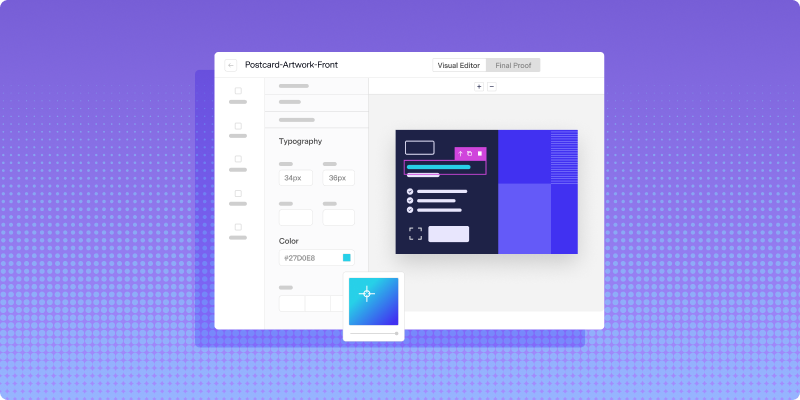
You do not have to begin every campaign with a blank page. Lob’s direct mail Template Gallery includes postcard and letter examples that can help your team select a format and begin developing campaign creative.
5. Track mail delivery and response
Tracking helps close the gap between submitting a campaign and understanding what happened next. However, delivery visibility and response tracking answer different questions.
Postal tracking signals can help your team understand when a mailpiece enters production, moves through the postal system, and is expected to arrive. These signals provide useful campaign visibility, but they should not automatically be treated as proof that a specific person received or read the piece.
Response tools connect the physical mailpiece to the action that follows. Depending on the campaign, you can use:
- Unique QR codes
- Personalized URLs
- Promo or redemption codes
- Dedicated phone numbers
- Campaign-specific landing pages
These tools help you understand which recipients or audience segments responded and what they did after engaging with the mailpiece.
USPS Informed Delivery gives participating recipients a digital preview of incoming letter-sized mail. It can create another digital touchpoint for your campaign, but it is different from campaign-level delivery tracking.
Lob uses production and postal event data to give teams visibility into individual mailpieces and expected delivery timing. Marketers can combine those signals with QR code activity, landing-page visits, redemptions, and other conversion data. This distinction between postal events and campaign outcomes is central to building more useful direct mail visibility and tracking.
6. Measure performance with campaign data
Tracking becomes valuable when you use the resulting information to improve your next campaign.
Start by choosing KPIs that align with the campaign’s goal. These may include:
- Response rate
- Conversion rate
- Cost per acquisition
- Revenue generated
- Return on investment
- Offer redemptions
- Landing-page visits
- Delivery timing
- Undeliverable mail rate
Operational data helps you understand whether mailpieces moved through production and delivery as expected. Response and conversion data show whether recipients took the intended action. You need both to understand the campaign.
For example, you might discover that one audience segment produced more conversions, one offer generated more responses, or one region experienced different delivery timing. You can use those findings to adjust your segmentation, creative, offer, format, or campaign schedule.
Lob’s reporting tools give teams visibility into mail activity and campaign performance without relying entirely on manual spreadsheets. You can also connect direct mail data with your CRM, marketing automation platform, or analytics tools to evaluate mail alongside other channels. Tracking the right direct mail KPIs helps turn that information into decisions your team can apply to future sends.
Build more connected direct mail campaigns
These six components work together. A targeted list makes your copy and offer more relevant. Strong design directs attention to the CTA. Delivery visibility, response tracking, and reporting show what happened and help you plan the next campaign.
Lob connects campaign creation, customer data, address verification, production, delivery visibility, and reporting in one direct mail workflow. Book a demo to see how your team can build, automate, and measure more connected direct mail campaigns.
Frequently asked questions about direct mail campaigns
FAQs

What is a direct mail campaign?
A direct mail campaign sends physical mail to a selected audience to encourage a specific action, such as visiting a website, redeeming an offer, registering for an event, or making a purchase.
Direct mail can run independently or as part of a coordinated campaign with email, paid media, SMS, and other digital channels. The audience, message, offer, design, and measurement plan should all support the same campaign goal.
Does direct mail advertising still work?
Yes. Direct mail can be an effective marketing channel when it is targeted, relevant, and measurable. Performance depends on list quality, audience selection, creative, offer, timing, and how easy it is for recipients to take the next step.
Rather than relying only on broad industry benchmarks, measure direct mail against your campaign goals. Control groups, unique response mechanisms, and consistent attribution windows can help you understand its incremental impact.
How much does a direct mail campaign cost?
Direct mail costs vary based on the format, dimensions, paper stock, print volume, personalization, postage class, mailing list, creative work, and production timeline.
A standard postcard will have a different cost structure from an oversized letter or self-mailer. Higher volume may affect per-piece pricing, but the total cost still depends on the campaign’s specifications. When comparing options, evaluate the complete workflow instead of focusing only on printing or postage.
Lob allows teams to manage printing, postage, delivery visibility, and campaign data through a connected platform rather than coordinating each stage through separate workflows.
What are some examples of direct mail campaigns?
Common direct mail campaigns include:
- Postcards promoting discounts, events, or product launches
- Letters containing detailed or personalized information
- Self-mailers that provide more space for offers and supporting content
- Welcome mail for new customers
- Renewal and retention reminders
- Win-back campaigns for inactive customers
- Cart-abandonment postcards
- Loyalty offers based on purchase history
- Follow-up mail triggered by customer or account activity
Triggered campaigns can connect direct mail to customer behavior in a CRM, ecommerce platform, or marketing automation system. This makes mail part of the customer journey instead of a one-time batch send.
Answered by:

Sam Melero