Managing overdue accounts can quickly become time-consuming. Your team has to prepare notices, confirm addresses, track deadlines, send follow-ups, and document each interaction while continuing to manage its regular workload.
That is why many businesses send delinquent accounts to a collection agency. But outsourcing also means giving another company control over an important part of the customer experience.
With the right workflows, businesses can manage more of the collections process internally. Lob’s Print & Mail API makes it possible to automate collection letters, connect them to payment activity, and track each mailpiece without coordinating manual print runs.
The result is a collections process that can respond earlier, maintain a consistent brand voice, and reduce the administrative work placed on your team.
Why businesses outsource collections
Collections involve more than sending a single letter after a payment is missed.
Teams need to identify overdue accounts, determine the appropriate next step, generate notices, confirm customer information, and follow up based on whether the balance has been resolved. When those tasks depend on spreadsheets and manual handoffs, the process becomes difficult to manage as account volume grows.
High-volume direct mail automation can reduce those repetitive steps while helping teams manage growing mail volumes more consistently.
A third-party agency can take over some of that work. However, it also creates distance between your business and the customer.
The agency may not have the full context surrounding the account, including the customer’s history, previous conversations, payment patterns, or relationship with your company. Its communication may also feel different from the messages the customer normally receives from your team.
For some accounts, outside support may still be appropriate. But businesses do not necessarily need to outsource every overdue balance immediately. An automated in-house process can help your team address accounts earlier and reserve outside collections for cases that require additional support.
What is in-house debt collection?
In-house debt collection means your business manages overdue accounts directly rather than immediately transferring them to a third-party collection agency.
Your team controls the timing, messaging, escalation process, and communication channels. Collection notices can use the same branding and tone as your other customer communications while still making the outstanding balance and required action clear.
An in-house process might include:
- A payment reminder shortly before the due date
- A notice after a payment becomes overdue
- A follow-up letter if the balance remains unresolved
- An email or phone call coordinated with the mailed notice
- A final internal notice before the account is escalated
The goal is not to make collections less serious. It is to create a clear, organized process that gives customers an opportunity to resolve their balances before the account moves to a more advanced stage.
Why timing matters in collections
The longer an account remains unresolved, the more difficult it can become to collect. Customers may forget the original invoice, lose track of previous communication, or become less responsive as additional notices accumulate.
Automated workflows allow your team to act soon after a payment deadline passes. Instead of waiting for someone to review a spreadsheet and prepare a batch of letters, a missed payment can trigger the appropriate communication automatically.
Earlier outreach can also feel more like a helpful reminder than a major escalation. A customer may have overlooked the invoice, experienced a payment issue, or assumed an automatic payment had already been processed.
Reaching out promptly gives the customer a clear next step while the account and original transaction are still familiar.
How direct mail supports in-house collections
Email and phone calls can play an important role in collections, but physical mail provides another way to reach customers and document important communications.
A printed letter can clearly explain:
- The amount due
- The original payment deadline
- Available payment methods
- The date by which action is required
- Who to contact with questions
- What may happen if the balance remains unpaid
With direct mail automation, businesses can generate and send those letters based on activity within their billing, customer relationship management, or account systems.
The customer’s information is added to the appropriate template, the letter enters production, and mailpiece activity can be passed back into the connected system. Your team does not need to manually export a mailing list, merge documents, print envelopes, or coordinate with a separate print vendor each time notices need to go out.
Build collection workflows around account activity
An automated collections workflow can begin as soon as an account meets a defined condition.
Connecting direct mail to your existing technology stack allows collection notices to be triggered by the same account and payment data your team already uses.
The most obvious trigger is a missed payment deadline, but teams can also use other account events to determine when outreach is needed. These might include an incomplete payment setup, a failed transaction, an unanswered invoice reminder, or a customer requesting additional services while an earlier balance remains open.
The right workflow depends on your business, customer relationships, and internal policies. A basic sequence might include:
- Send an email reminder when the payment becomes overdue.
- Mail a personalized letter if the balance remains open.
- Notify the account owner or support team that the letter has been sent.
- Send a follow-up communication after the expected delivery window.
- Escalate the account if the customer does not respond.
Connecting those steps reduces the chance that an account will be overlooked or handled inconsistently.
Personalize collection letters without creating each one manually
Collection notices need to be direct, but they do not have to feel generic.
Personalized direct mail allows your team to adjust the message, payment details, deadline, and next steps for each account without manually creating every letter.
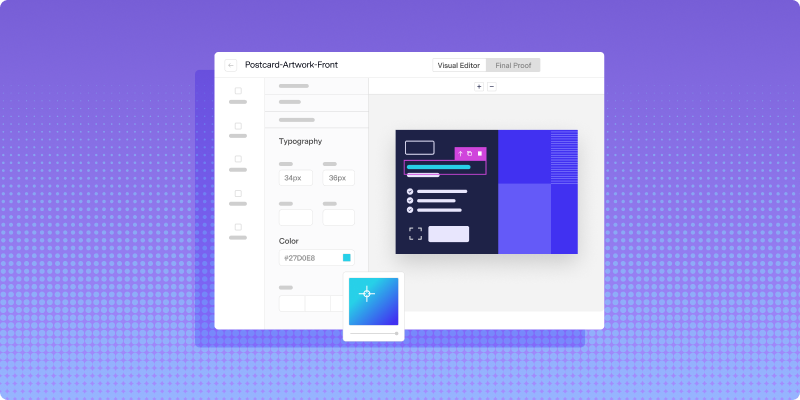
Lob supports HTML-based templates that can automatically include information from the customer’s account. Your business can personalize details such as the customer’s name, account number, balance, original invoice date, payment instructions, and support contact.
You can also create different templates for different stages of the process. An early reminder might use a more conversational tone, while a later notice can communicate greater urgency and provide a firm deadline.
This allows your team to maintain a consistent collections policy without sending every customer the same message regardless of the circumstances.
Templates can also be updated as your policies, payment options, or communication requirements change. Instead of rebuilding the mailing process, your team can revise the content while keeping the underlying automation in place.
Maintain accurate customer address data
An automated collection letter is only useful if it reaches the correct address.
Customer records may contain typos, outdated information, inconsistent formatting, or missing apartment and suite numbers. Sending a notice to an incomplete address can delay the collections process and create additional work for your team.
Lob’s Address Verification API can help standardize and verify addresses before a collection letter enters production. Address checks can be added when a customer creates an account, updates their billing information, or reaches the point where a mailed notice is required.
Catching address problems before sending helps keep the workflow moving and gives your team more confidence in the customer information being used.
Coordinate mail with email and customer outreach
In-house collections do not need to rely on one communication channel.
A physical letter can be paired with an email, text message, account notification, or phone call. Each communication can reinforce the same deadline and payment instructions while giving the customer multiple ways to respond.
Real-time mail tracking can help your team coordinate follow-up based on production and delivery activity instead of relying only on estimated timelines.
For example, your system could create a task for an account representative after a notice has moved through production or is expected to reach the customer.
This creates a more organized process than sending unrelated messages from different teams. The customer receives consistent information, and employees can see which steps have already taken place before contacting the account.
Test and improve the collections process
Bringing collections in-house gives your team more visibility into how customers respond.
You can compare different notice schedules, formats, messages, and calls to action. One customer segment may respond well to an early postcard reminder, while another may require a formal letter with detailed account information.
You can also review where customers tend to resolve their balances. If most payments arrive after the first mailed reminder, the team may not need to add more communication at that stage. If customers frequently contact support with the same question, the letter may need clearer payment instructions.
The purpose of testing is not to make the process more aggressive. It is to identify which communications help customers understand the issue and take action with the least unnecessary friction.
Keep compliance involved
Collection communications may be subject to legal, regulatory, contractual, and industry-specific requirements.
Before automating collection letters, businesses should work with their legal and compliance teams to review the language, timing, recordkeeping, and escalation process. Templates should also be reviewed whenever policies or applicable requirements change.
Automation can make an approved process easier to execute consistently, but it does not replace the need for appropriate internal oversight.
Take more control of your collections workflow
Businesses do not have to choose between managing every collection task manually and immediately handing every overdue account to an outside agency.
Lob helps teams automate personalized collection letters, connect them to account activity, verify customer addresses, and track mail throughout the process. That gives your business more control over timing and messaging while reducing the repetitive work involved in sending notices.
Book a demo to learn how Lob can support automated collection communications.
Frequently asked questions
FAQs

What is in-house debt collection?
In-house debt collection is the process of managing overdue customer accounts within your own business. Your team controls the communication schedule, messaging, payment instructions, and escalation process instead of immediately transferring the account to a third-party agency.
What are the benefits of managing collections in-house?
An in-house process gives your business more control over customer communication, timing, branding, and account context. Automation can also reduce the manual work involved in preparing and sending collection notices.
How do you automate in-house collection letters?
You can connect a print and mail API to your billing, CRM, or account management system. When an event such as a missed payment occurs, the system generates a personalized letter and sends it into production automatically.
Can collection letters be personalized?
Yes. A collection letter can include customer-specific information such as the recipient’s name, account number, balance, invoice date, payment deadline, and contact information. Businesses can also use different templates based on how long the account has been overdue or where it is in the internal escalation process.
Should businesses stop using collection agencies?
Not necessarily. Some accounts may still require outside support. An automated in-house process can help businesses manage earlier collection stages directly and determine when an account should be escalated based on internal policies.
Answered by:

Sam Melero