
Direct mail can reach customers in ways that crowded digital channels cannot. A physical mailpiece gives people something tangible to engage with and creates another opportunity for your message to stand out.
Yet many companies still struggle to deploy direct mail effectively. At Lob, we see three operational bottlenecks that can slow teams down before they ever get a mailpiece into a mailbox. Here’s what to watch for—and the right questions to ask before those bottlenecks cost you time and money.
1. FTP creates delivery delays and puts your data at risk
Onboarding a print and mail vendor shouldn’t take weeks of back-and-forth. But many still rely on FTP for data transfer—a protocol that dates back decades. Standard FTP does not encrypt data in transit, lacks two-way communication, and can create challenges during high-volume triggered sends.
When you’re sending triggered mail—a follow-up tied to a customer action—every hour of delay matters. Batch-based FTP workflows can struggle with the high volume of smaller files that triggered campaigns produce, slowing throughput and pushing back send times. FTP can handle large single-file transfers reasonably well, but that’s not how many modern mail programs work.
A mailed offer triggered by a customer action should move quickly—not sit in a manual queue for days. Transferring content via FTP can create additional delays because the printer may need to process each batch manually. Since FTP does not provide specialized application-level error responses, you may not know there is an issue with the data or content until after your vendor reviews the batch.
Then there’s the security risk. Standard FTP does not encrypt data in transit, while protection for stored data depends on the vendor’s security controls. That means personally identifiable information—names, addresses, and account details—can be exposed if your vendor does not encrypt data in transit and at rest.
When you’re evaluating print vendors, dig into their data transfer setup. Here’s what to ask:
- What protocol do you use—FTP, SFTP, or API?
- What is your throughput speed for high-volume triggered sends?
- How do you encrypt data in transit and at rest?
- Do you have transparent logging and an SLA for resolving data issues?
If a vendor can’t answer these questions clearly, they may not be equipped for modern triggered mail programs. The strongest partners offer API-based integrations with automated validation, transparent logging, and mail tracking visibility.
2. Rigid templates and slow vendor timelines kill your ability to test
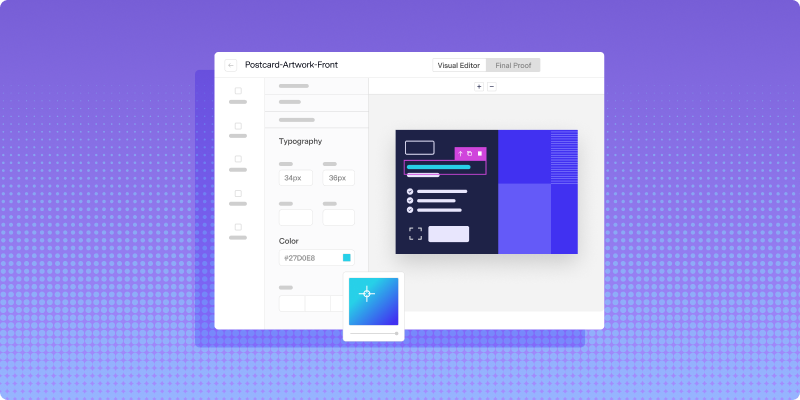
With a traditional print and mail vendor, moving from setup to your first mailed batch can take weeks. Template setup, proofing, data mapping, approvals, production, and delivery can all extend the timeline. Digital campaigns can launch quickly, so lengthy vendor processes can put direct mail teams at a disadvantage.
Marketing managers and vendor account managers may go back and forth throughout the process. Proofing, setting up templates with the correct merge variables, and creating new templates can each add time because two different parties need to review and approve every change.
A rigid template may not be changed without vendor involvement or another round of proofing and approval. Finalizing templates and preparing them for production can require additional review. If you want to change the printed piece after that process is complete, you may need to create a new template and repeat several of those steps.
By contrast, dynamic templates allow teams to reuse a core design while changing text, offers, imagery, and other elements using recipient data.
At that pace, A/B testing becomes difficult. If you can’t test a headline variant without restarting a lengthy approval process, you may stop testing. Marketing teams can end up running the same creative because iterating feels too expensive and too slow.
When evaluating a vendor, ask how they separate campaigns and handle different creative treatments. Is there a single point of contact and a Service Level Agreement (SLA) in place to support timely responses? Can your team run direct mail A/B tests without rebuilding the entire campaign?
A print and mail partner worth working with should answer these questions with specific timelines and documented processes.
3. Without delivery tracking, campaign planning is guesswork
Most print and mail vendors will give you a timeline and an SLA. What they may not provide is visibility into whether they are meeting it. Once your files leave your hands, you may have no real-time status, delivery estimate, or way to verify whether your mail is moving through the mailstream as expected.
Without delivery data, omnichannel planning becomes difficult. If you’re trying to coordinate a follow-up email, paid media retargeting, or a USPS Informed Delivery digital preview alongside your mail drop, you need to know when that mailpiece is likely to arrive.
Without reliable delivery data, your other channels may fire at the wrong time. You may also be left guessing at inventory levels for a promotion that has not reached customers yet.
An Intelligent Mail barcode (IMb) is a USPS barcode used to identify and track mailpieces as they move through the postal network. As a mailpiece passes through USPS processing equipment, scan events provide data about its progress and expected delivery.
However, IMb tracking provides visibility into the mailstream rather than guaranteed proof of final delivery.
When working with your print vendor, push for this level of detail:
- Do you use IMb tracking, and can you surface scan events?
- What mail reports do you provide, and how often?
- Can you supply proof of mailing for each campaign?
If your vendor doesn’t use IMb, at minimum, get a mailing report plan in writing. Visibility isn’t a nice-to-have—it’s how you determine whether to send your follow-up email today or next week.
Requesting this level of detail creates accountability with your vendor and helps you coordinate direct mail with your other channels.
Send smarter direct mail with Lob
Direct mail should take days to set up—not weeks—with templates you can update without rebuilding and tracking from production through the mailstream. Lob’s APIs and integrations replace manual, batch-based processes with secure workflows, flexible templates, and visibility into each mailpiece.
Whether you’re running triggered campaigns or scaling national programs, Lob provides production and delivery tracking so you can monitor when mail enters production, moves through the USPS network, and approaches its expected delivery date.
Book a demo to see setup, tracking, and delivery data in action.
Frequently Asked Questions
FAQs

Is direct mail marketing still effective?
Yes. Direct mail gives brands a tangible way to reach customers outside crowded digital channels. It can support acquisition, retention, and lifecycle campaigns, especially when the message, audience, and timing are relevant.
Campaign effectiveness also depends on execution. Your vendor’s workflows, targeting capabilities, production process, and delivery visibility all affect whether mail reaches the right recipients at the right time.
What is direct mail marketing?
Direct mail marketing means sending physical mail—such as postcards, letters, and brochures—directly to a targeted list of recipients. It reaches people outside digital inboxes and gives marketers a tangible way to communicate an offer or message.
The value comes from sending the right offer to the right address, timed to a relevant customer action—a cart abandonment, renewal date, service call, or other lifecycle moment. Many teams underestimate how much the vendor and setup process affect whether mail arrives when it is supposed to.
Is direct mail marketing legal?
Generally, yes, but the requirements depend on your industry, the type of mail you’re sending, the recipient data you use, and where your audience is located.
Businesses should honor opt-out and suppression requests, follow USPS mailing requirements, and comply with applicable privacy and marketing laws. Requirements may be stricter for healthcare, financial services, insurance, and other regulated industries. International rules also vary by country.
Review the regulations that apply to your program and consult a qualified legal or compliance professional when necessary. Learn more about direct mail regulations and compliance.
How long does it take to launch a direct mail campaign?
With a traditional print and mail vendor, setup can take weeks when the process involves manual data transfers, template creation, proofing rounds, and vendor approvals. The exact timeline depends on the mail format, campaign volume, personalization requirements, mail class, and intended delivery window.
Lob reduces manual handoffs through reusable templates, APIs, integrations, and automated production. Start with your preferred in-home date and work backward to allow enough time for creative approval, production, and USPS delivery.
Answered by:

Sam Melero